
How it works
How Dry Ice Blasting Works
Dry Ice Blasting is a revolutionary cleaning process that uses compressed air to accelerate solid CO₂ pellets (dry ice). These pellets impact surfaces with controlled force to remove residues like ink, glue, paint, oil, grease, food particles, rubber, mold, and other contaminants — safely and efficiently.
Similar to sandblasting but non-abrasive, this method doesn’t use harsh media like sand or grit. When dry ice pellets hit a surface, they sublimate instantly — transforming from solid to gas. This causes a rapid micro-explosion that loosens contaminants while leaving the base surface unharmed.
The extreme cold (−109°F) also weakens the bond between dirt and the surface, freezing and detaching it completely. Unlike traditional cleaning methods, dry ice blasting leaves no residue or secondary waste, making it an eco-friendly and efficient solution.
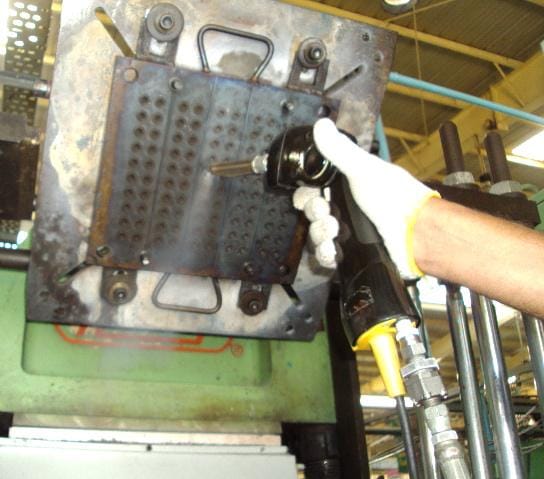
Applications of Dry Ice Blasting
Dry ice blasting is versatile and widely used across industries:
Rubber and plastic surfaces
HDPE and PET containers
Reaction foam molds
Core boxes and screens
Permanent aluminum molds
Baking ovens and conveyors
Wafer oven plates and mixers
Press cleaning
Gears, guides, and anilox rolls
Motors, windings, and armatures
Switch gears and transformers
Sub-stations and circuit boards
Equipment and mold cleaning
Robotic welding equipment
Painting systems and assembly lines
Tire/rim assembly and sealant removal
Landing gear and brake components
Engine and part cleaning
Plant and equipment cleaning
Oil, grease, and adhesive removal
Fire restoration and mold remediation
Surface prep for inspection and testing